Showing posts with label wine history. Show all posts

Wednesday, April 1, 2015

10 Great Wine Reads


It’s National Library Month, the perfect time to check out a variety of wine books and indulge your interest in all things vino. Here are just a few suggestions for the oenophile and the budding wine lover, alike.


Wine Lover’s Wine Books

1) American Wine: The Ultimate Companion to the Wines and Wineries of the United States by Jancis Robinson and Linda Murphy (2012)

Enjoy an in-depth look into America’s wine culture with over 7,000 wine producers. The book features some of the country’s best wines, wineries and winemakers and includes 54 detailed maps of local wine regions, along with more than 200 photos highlighting just what makes this country a wine-rich nation.

2) Exploring Wine: Completely Revised 3rd Edition by Steve Kolpan, Brian H. Smith, Michael A. Weiss, The Culinary Institute of America (2010)

This is a wine reference book for food and wine lovers, professionals and oenophiles. Written to demystify wine and the winemaking process, it covers major wine regions around the world, explaining which wines and foods pair well together. Tasting notes are offered along with easy-to-use guides.

3) Eyewitness Companions: Wines of the World: Your Essential Handbook
by DK Publishing (2004)

Still a great source about each of the 35 major wine-producing regions in the world. Loaded with history, maps and photos, you’ll get enough of a wine education to forgive references to some producers who are no longer in business. A portable guide that could assist you in mapping out your next international wine jaunt.


The History of Wine

1) Judgment of Paris: California vs. France and the Historic 1976 Paris Tasting That Revolutionized Wine by George Taber (2005)

The factual version of the Paris Tasting of 1976 by the only reporter who covered it. Taber’s Time Magazine article stunned the wine world and transformed it when he reported how a blind-tasting panel of top French wine experts chose two unknown California wineries on which to bestow top honors. It’s the perfect “David and Goliath” story set in the world of wine.

2) Wine and War: The French, the Nazis, and the Battle for France’s Greatest Treasure by Donald Kladstrup and Petie Kladstrup (2002)

In 1940, when France fell to the Nazis, the Germans began looting French wine. While Adolph Hitler did not imbibe, Nazi troops had no such aversion.  This book tells of the extraordinary measures that French winemakers and producers went to in order to save their vineyards and their vino from the Germans.
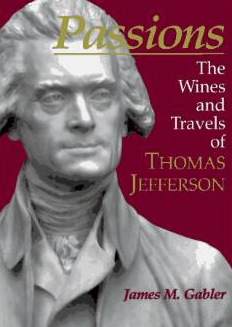
3) Passions: The Wines and Travels of Thomas Jefferson by Thomas Gabler (1995)

This is a biography about Thomas Jefferson that focuses mainly on his travels throughout France and Europe. Jefferson was well known for his love of good food and good wine: especially French wine. Follow along with Jefferson as he describes his perceptions of the food and wines he sampled along the way. Known as America’s first wine connoisseur, Jefferson’s passion for wine shines through.


Wine Adventures

1) The Curious World of Wine: Facts, Legends, and Lore About the Drink We Love So Much by Richard Vine, PhD (2012)

Vine’s book is full of little known facts, interesting lore, and quirky regional tidbits, all revolving around our love of wine through the ages. Discover some juicy details concerning wine’s founders and fathers along with the movers and shakers of the New World, and how wine has always played a part in love.

2) In Search of Bacchus: Wanderings in the Wonderful World of Wine Tourism
by George Taber  (2009)

Taber chronicles his journey to twelve of the most beautiful wine regions in the world. From Napa, the home of wine tourism, to a thousand-year-old monastery in Tuscany, to traveling the wine routes in Stellenbosch, South Africa, Taber shares his thoughts and recommendations with the reader. Consider this a vicarious chance to travel around the world to a dozen of the most interesting wine hot spots.

3) Adventures on the Wine Route by Kermit Lynch  (1990)

If you love French wines, or are planning a trip to the French wine regions then Lynch’s book will get you in the mood to explore. Follow his adventures as he shares wonderful discoveries during his twenty years of making annual wine-buying trips to the wine regions of France. While it may have been published 25 years ago, it can still entertain and enlighten.

Bonus Book

Why You Like The Wines You Like: Changing the Way the World Thinks About Wine by Tim Hanni (2013)

Hanni has been called “the Wine Anti-Snob” by the Wall Street Journal with good reason, he believes, and applies science to show, that the wine drinker has been right all along: personal preference rules when pairing wine with food. This concept empowers the wine drinker and makes all those “You Should Be Drinking …” wine guides look rather passé.


Now that you have some ideas, grab a few books from your local library and curl up for a nice read. After all, what’s better than a rainy spring evening spent reading with a glass of wine?

~ Joy

Wednesday, December 18, 2013

Mulling Over the Holiday Tradition of Mulled Wine


Winter makes us want to hibernate; to sit by a roaring fire filled with comfort food, and sip something warm, maybe even spirited. That’s why mulled wines are a natural go-to for the holidays, and those cold winter days ahead.


Mulling Spices
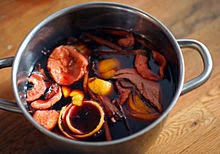
“Mulled” means to heat and spice. A mulled wine is usually created using a red wine, Syrah or Zinfandel are good choices, as is a Port or claret. Then select spices, like cinnamon, cloves, nutmeg, allspice, anise, cardamom, citrus, even vanilla, along with sugar or honey for additional sweetening. Fruits such as raisins, apples, and figs, even cranberries can be added along with vodka, rum, sherry or brandy for an added kick. Top it off with a cinnamon stick for stirring, and you have a mulled wine.


Early Rome
So where did we get this inclination to heat up a wine? It goes back to the First Century in Rome. It was the early Romans who spiced wines and heated them up. It was thought to be a way to save wine that was spoiling.


Hippocrates
Ypocras
The Greeks claim that Hippocrates, the Greek father of medicine, invented mulled wine and called it Ypocras. It was to be used as a medicinal tonic. Either way, word spread of the wonderfully warming concoction and soon other countries were creating their own versions.


Gluhwein
In Germany and Austria it is known as Glühwein, which loosely translates into “glow wine.” The wine was named because of the hot irons pulled from the fire and placed in the wine to mull it. The recipe has been basically the same since the 1400’s; the wine is made by taking a red wine, adding cinnamon, sugar, cloves, star aniseed, citrus and sometimes, vanilla, then heated, or “mulled” together. Glühwein has become an essential beverage of the German Christmas season.


Lussekattre
The Nordic countries call it gløgg and usually serve it with ginger snaps, rice pudding, or lussekattre (a sweet saffron bun.) There are alcoholic and non-alcoholic versions available for purchase at stores and holiday markets.

Making Glogg
But most still prefer to make their own gløgg, using red wine, sugar, and a variety of spices including ginger, cardamom, cinnamon, cloves, and bitter orange. Other spirits may also be added such as vodka or brandy.


Negus
The British embraced mulled wine after Charles Dickens touted it as the traditional holiday drink in A Christmas Carol. In Victorian England Negus was a take on mulled wine using Port, spices, sugar, and water. Negus was extremely popular, and was even served to children at special celebrations.


Mulled Crockpot Wine
In the U.S. mulled wine is also a holiday favorite. We tend to mix the ingredients together, place everything in a crockpot turned on low, and let it simmer. That way a mulled glass of wine is always ready, whether you’ve been shoveling snow, decorating the Christmas tree, or addressing holiday cards – cause you never know when that urge to hibernate and stare into a fire will overtake you at this time of year - and you should always be prepared.

Cheers! And Happy Holidays!

~ Joy

Wednesday, July 31, 2013

Why Do We Toast?


When someone gets a new job, we clink glasses. When we get a raise, we raise a glass, and toast. For New Year’s Eve, we raise several glasses and “ring” in the New Year.

We assign an important status to toasting, be it humorous words or thoughtful messages, just ask any best man who’s had to give the official wedding toast, or the office mate, put on the spot for a toast at the retirement party.


Toasting is a custom that is centuries old. A ritual where we generally express goodwill and best wishes for positive things to happen to the guest of honor, or to celebrate special events and holidays. Toasts can be somber, romantic, affectionate, funny, bawdy, even rude.


Drinking to “one’s health” began in ancient Greece as a way to make sure you were not being poisoned. Simply slipping a bit of poison into a drink was an easy way to be rid of an enemy, with no one the wiser.

With this in mind, it soon became expected for the host to pour the wine into a decanter and take the first drink. If he survived, you could drink “to your health.”

But what if the poison was in your cup? Soon revelers were spilling wine into each other’s cups as a way to make sure everyone was imbibing with the same wine. This evolved into the clinking of glasses when a toast is made; a symbolic sharing of the wine and good wishes – to every one’s health.

Another idea is that we began clinking glasses as a way of scaring off evil spirits, possibly those same demons that caused drunkenness…


There is also a theory that we clink glasses as a way of fulfilling the fifth sense – hearing – since seeing, smelling, touching, and tasting are already covered in the wine drinking experience.

Yet another premise is that after the communal cup had gone by the wayside, we touched glasses to express that we were still connected and sharing this experience together.

The Romans put a twist on the practice by adding a piece of spiced bread (toast) to the wine cup as a means of soaking up unwanted flavors and smells while adding a spicy flavor.

In 16th Century England, drinking a “toast” meant you were drinking to good health with a wine that literally had spiced toast in it.  This tradition continued through the 17th and 18th centuries when it became chic to drink a toast to someone’s health, wealth, or beauty.


Even today, there are rules regarding toasting.

Toasting Etiquette:

• The person giving the toast should be standing

• Everyone should have a glass as the toast is given

• Holding your glass but not drinking at least a sip from it is ill mannered

• To refuse a glass or put your glass down before the toast is finished is considered to be rude

• Inverting your glass is very discourteous to the guest of honor

• Tapping a glass with silverware to get attention is considered uncouth

And there are rules for the guest of honor such as never drink after being toasted. Instead he or she should stand, nod to the group, and offer their thanks.

But remember to clink your glass with someone else’s after a toast. Not only does it produce a pleasing sound, it creates a physical connection between members of the group, and their shared good wishes. If you are in too large of a group to touch glasses with everyone, simply make eye contact and you have created that connection.

Most Famous Toasts

There are so many well-known toasts, but most everyday toasts are spur of the moment well wishes to commemorate a special moment. Just remember to keep them simple, sincere, and succinct.

If you find yourself in need of a few words – Here are some suggestions:

A Toast to Friendship:

 "May friendships, like wine, improve, as time advances.
And may we always have old wine, old friends, and young cares.”


A Toast to Happiness:

"May neighbors respect you,
Trouble neglect you,
The angels protect you,
And heaven accept you."


A Toast to Health:

"May you live as long as you like,
And have all you like as long as you live."


An Irish Blessing
May the road rise to meet you.
May the wind be always at your back.
May the sun shine warm upon your face.
And rains fall soft upon your fields.
And may ye be in heaven a half-hour
Afore the devil knows ye're dead!


“Life, alas, is very fine,
So up with your glass, 
Down with the wine.”

~ Joy

Wednesday, July 17, 2013

Those First Attempts to Produce (Real) Wine in the New World

Europe has been involved in the wine industry for hundreds of year.  But did you know that the U.S. could have also been an active player 400 years ago, if not for colonists other interest?

It all began on July 16, 1619 when the King of England, and a Virginia colonist by the name of George Yeardley, decided to start a vineyard of French grapes in the New World.

Ten years before, in 1609, Sir George had set sail for Jamestown as a captain in charge of soldiers but was shipwrecked in Bermuda. Passengers from the doomed ship worked together and built two more ships from supplies on the island. They arrived safely in Jamestown 10 months later.


The Starving Time
But Jamestown was in a desperate state, with most of the settlers dead from sickness, starvation, or Indian attacks. Captain Yeardley and his men were ordered to protect the town until help arrived. Once it had, Yeardley led 150 men into the mountains to search for gold and silver that could be mined.


Chickahominy Indian Agreement
Just four years later, in 1616, Yeardley was appointed Deputy-Governor of Virginia. Understanding what the colony needed to survive and thrive, he promptly reached an agreement with the Chickahominy Indian that secured peace and food for the settlers for two years.  He was appointed to the post again in 1625.

House of Burgesess
Yeardley was well respected in the community. He presided over the initial session of Virginia’s first representative legislative body, known then as the House of Burgesess, (Virginia General Assembly) on July 30, 1619.  In November 1619, Yeardley was appointed to serve as governor of Virginia until 1622.

King James I
King James I was against colonists growing tobacco. He touted Virginia as a fruitful land and saw an opportunity for wine to become a major export product to England. Under the king’s orders, Yeardley took French grapevines back to Jamestown to be cultivated by vignerons (winemakers) who knew how to tend the vines correctly and could produce a drinkable wine.


Although there were abundant wild grapes in the New World, the “wine” produced from them was acidic and sour. Colonists had no patience with winemaking and let the wine “age” 5 or 6 days before drinking it. The French grapes flourished but the winemaker died.


How to Make Wine
By 1620, more winemakers and over 10,000 vines had arrived in the New World. King James I commanded that every householder in the colony be given a booklet written by John Bonoeil with the "instructions how to plant and dress vines, and to make wine." These booklets were the first written instructions given to American winemakers.
 
According to Bonoeil’s instructions, “if the grapes be too hard, they may boil them with some water; . . . and then let them work thus together five or six days . . . After that, you may draw it, and barrel it, as we have said, and use it when you need. I have oftentimes seen such wine made reasonable good for the household. And by this means every man may presently have wine in Virginia to drink.”

Jamestown in 1620
But the colonists had little time or patience to plant and tend wine grapes; there was far too much money to be made with tobacco. What wine that did get sent back to Britain was said to have spoiled during the long voyage and was considered to be “rather of scandal than credit to us."

By 1625, the king had commanded that vineyards be planted by all land owners – “Wherefore now we have taken an order that every plantation . . . shall impale [fence] two acres of ground, and employ the sole labor of 2 men in that business [planting grape vines] for the term of 7 years, enlarging the same two acres more, with a like increase of labor . . . By this means I hope this work will go really forward, and the better if good store of Spanish or French vines may be sent us.”


The Virginia General Assembly also passed a law that required every male over the age of 20 to plant 20 grape vines. 


But in the end, colonists refused to give up the economical advantages of growing tobacco, and the vineyards and winemaking fell to the wayside. By the mid-1650’s it was apparent, Virginia was not going to become the land of wine and vines. Tobacco was king and would reign for another 300 years.

~ Joy