Wednesday, October 10, 2012

Haunted Wineries of the North and South


It’s October, when thoughts turn to harvest, Halloween, and hauntings – the perfect time to explore a haunted winery or two.  This month, Joy’s JOY of Wine will take a look at haunted wineries across the U.S. and the world. So pour a glass of something dark and brooding as we explore some ‘spirited’ wineries, and those who make them so…

Howell’s Main Street Winery is a boutique winery located in historic downtown Howell, Michigan.  With wooden floors and creaking stairs, it also boasts of a ghost or two.

Owners John and Sandy Vyletel report that objects move of their own accord, noises emit from empty rooms, and lights go on and off.

The Southern Michigan Paranormals group has investigated Howells’ on several occasions and picked up paranormal activity. The group reports several spirits residing here. The ghost of a small boy has been sighted in the winery.  Apparently his parents owned the building in the 1800’s and he decided to stay.

Howell’s Main Street Winery is getting into the spirit of things this season with psychic and intuitive readings scheduled for the last weekend of October.  Be sure to check out their VuDu wine.

Howell’s offers over 30 wines to choose from including grape, fruit and dessert, along with seasonal wines. If you’ve always wanted to make your own, Howell’s holds sessions where you can select the wine you wish to make and take it from crafting, to bottling, corking and labeling with their guidance.  Learn more at http://www.howellsmainstreetwinery.com/


~


Old North State Winery & Brewery in Mt Airy, North Carolina opened in a building that has had its share of odd events.


The structure was built in 1885 and operated as a general store.  In 1926, a rival storeowner set off dynamite in front of the store and destroyed it.  Years later, during the building’s reconstruction, an arm bone was discovered.  No one knows to whom it belonged.

The winery began as a cooperative in 2002. Employees have reported that doors close on their own, footsteps are heard shuffling through the cellar, and shadows appear to have a life of their own.  It’s been rumored that a suicide occurred on the second floor, but most of the activity happens in the wine cellar.  The cellar staff named one of the wines, Restless Soul,” after the paranormal occurrences.  

Old North State Winery and Brewery has over 20 wines available.  For more information, visit http://www.oldnorthstatewinery.com

Know of a haunted winery?  Let me know where the wine spirits imbibe….  Next week, haunted wineries of the Midwest.

~ Joy

Wednesday, October 3, 2012

Haunted Wineries of the Eastern U.S.

 
It’s October, when thoughts turn to harvest, Halloween, and hauntings – the perfect time to explore a haunted winery or two.  This month, Joy’s JOY of Wine will take a look at haunted wineries across the U.S., and the world. So pour a glass of something dark and brooding as we explore some ‘spirited’ wineries, and those who make them so…
 
The Winery at Marjim Manor in Appleton, New York, has a reputation - for being haunted.  Many people report feeling watched while in the building.  The owners have heard voices, seen objects move on their own, and the apparition of two men has been observed.

The manor actually began as a family home. Built in 1854 by Shubal Scudder Merrit for his wife and children, members of the family resided there until 1895.  Dr. Charles Ring then purchased the house for his wife, Hannah.  They named it Appleton.


In 1933, the Sisters of St. Joseph purchased the home.  They turned the house into a nuns’ retreat, created a farm school for deaf boys, and formed a camp for girls.  The Sisters stayed for 60 years.

In 1993, the home was purchased for use by Gardner Graphics.  After ten years, it was sold again. In 2003, current owner, Margo Bittner bought the house in order to turn it into a winery.  One year later, the Winery at Marjim Manor opened with ten different types of wines. 

So who or what haunts this winery?  Reports indicate that possible ghosts include the first owner, Shubal Scudder Merritt, Shubal’s son Lewis, who was accidentally shot by his father and died in the house.  Second owner, Dr Charles Ring is said to appear in the manor at times. And so does Duke, one of the dogs that lived with the Sisters of St. Joseph. 


While most wineries tend to play down otherworld occurrences, Marjim embraces it.   The winery has been featured on the Travel Channel’s  Most Terrifying Places in America and on Ghost Hunters. 


Want a chance to see the sprits?  Private group ghost hunts can be scheduled for Friday or Saturday nights with 4 weeks notice and a minimum of ten guests.  The Winery at Marjim Manor also offers wine tastings, tours, and events.  For more information visit their web page @ http://marjimmanor.com

~

Miles Wine Cellar in Himrod, New York is another winery with a haunted past.  Located in a Greek Revival Mansion, the grounds over overlook Seneca Lake, in the New York Finger Lakes Wine region.

 
According to local legend, a young couple from the Victoria era can be seen on the front porch in an embrace.  Rumor has it that they died tragically in the house, but no one has actually been able to trace the story.

Doug Miles and Suzy Hayes have lived in the home since the eighties.  They report several incidents of slamming doors throughout the house, mists rising from the floors, and bed quilts being thrown about the room. (And did I mention there is also a family cemetery on the grounds?)


In 2003, the winery released a white wine, appropriately named “Ghost.”  The bottle features a silk-screened image of a Victorian woman, with the mansion visible among her skirts.  The wine is still in production.


Miles Wine Cellars offers wine tastings, a café with seasonal food offerings, and an inn where you can spend the night.  The Inn at Miles Wine Cellars is located in the mansion.  A two-night stay is required.   Learn more @ http://mileswinecellars.com
 
Have a favorite haunted winery?  Let me know where the spirits imbibe….

~ Joy

Wednesday, September 26, 2012

Harvesting the Grapes at Night -The Benefits


Harvest Moon
Gathering the grapes under a harvest moon is a romantic image, but it also has its roots in an age-old tradition.  Europe, Chile, and Argentina all harvest at night.  In the U.S., California, our largest grape producing state, harvests about two-thirds of its grape crop after the sun goes down.

Harvesting grapes at night allows the picking to occur when the temperatures are cooler.  This is a benefit for workers, but it is also when the sugar levels in the grapes are more stable, the quality and acid levels are better, and there is less chance of spoilage. Plus, more tonnage can be picked and processed at night.


Nighttime harvesting is also more energy efficient.  Picking grapes when they have cooled in the darkness cuts down on the time and energy needed to pre-cool them before they can be pressed or fermented.


When grapes arrive at the winery in the early morning hours, they can immediately be crushed, pressed, and the first fermentation started. When harvesting during the heat of the day, grape temperatures can get up to 110 degrees.  To crush and ferment they should be in the 55-degree range, which means they must be chilled.  Cooler grapes also means the winemaker has better control of the first fermentation process.


When harvesting begins at dawn, it is usually stopped by noon or 1 P.M.  The temperatures in the vineyards are just too hot for the workers, and the grapes.  When harvesting at night, workers can pick any where from 8 to 12 hours.

And the benefits for the workers are great.  Nighttime temperatures are much easier to work in than the hot 80 to 100 degree days during August and September. Workers don't have to worry about bee stings and surprise snake encounters among the nighttime vines. The only disadvantage to nighttime harvesting could be hilly or rough terrain, which is more difficult to navigate at night.


Night harvesting began in the U.S. in the early 1970’s.  California and New York understood the benefits of harvesting at night and blazed the trail.  Now, night harvesting is a common practice throughout the world.  While mechanical harvesting is common at night, it takes a bit more prep work when the grapes are handpicked. 

Workers may harvest under rented diesel-powered lights that road crews use for nighttime work.  Smaller vineyards may simply give each worker a headlamp.  Regardless of the lighting method used, the grapes and the workers are all fresher in the end.

While I’ve done my share of daytime grape harvesting, I have yet to take part in a nighttime harvest.  Something I'll add to my bucket list ; )

~ Joy

Wednesday, September 19, 2012

Harvesting the Grapes


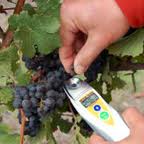
With September comes harvest time in the vineyard.  From now through October, most of the grapes will be picked and crushed, juice will be put into tanks and barrels, and wine making will begin.


The actual timing of the harvest varies, year to year, depending on what types of grapes are being picked and when they have reached their peak ripeness. There are several factors that come into play when deciding when to pick; including the varietal, the acid, tannin and sugar levels of the grapes, what style of wine the winemaker will be making, and the weather.

Even the actual method of harvesting can cause serious discussions in wine circles.  Most vineyards that mass produce wine prefer to use machines to harvest the grapes, while smaller vineyards, and those with a more traditional approach, prefer handpicking.


Mechanical harvesting caught on in the U.S. during the 1960’s. This involves a machine that goes along the rows, beating, shaking, or stripping the vines.  The grapes fall onto a conveyor belt that deposits them into a waiting bin.


The disadvantages of using machines instead of people include the fact that the machine cannot distinguish ripe grapes from rotted clusters, so both get taken to the transport container.  Other vine debris is also dumped into the bin, including bugs and leaves.  In the end, the grapes must still be hand sorted to eliminate those that are rotted or unripe.  Grape skins, which are fragile, may also be broken or damaged when machine picked.  This can cause oxidization or an unwanted amount of color the juice.  Also, there are many areas where mechanical pickers cannot be used because of the terrain.

The benefits of using machines to do the harvest mainly have to do with cost and quantity.  A machine can run 24 hours a day, harvesting anywhere from 75 to over 200 tons of grapes.

Hand harvesting also has its advantages and disadvantages.  Again, cost and quantity can be figured into the disadvantage column.  But the advantages include gentler handling of the fruit and a keen eye as to what is ripe and ready for picking. Grapes are put into lugs or containers when picked and set at the end of rows to be gathered and placed on trailers or truck beds for their journey to the winery or harvest shed. And hand picking increases the number of people employed during the harvest.

Once the grapes have been sorted, they may or may not be destemmed.  Depending on the type of grape and the type of wine to be made, grapes may go directly into a wine press.


While crushing brings about images of an “I Love Lucy’ episode, feet are seldom used.  Instead, the grapes are placed into a wine press and gently crushed with controlled pressure.  This crushing breaks open the grapes, allowing the juices to flow. The grape juice then runs into a waiting tank.

Once crushing has been completed, it is time to start the primary fermentation and another season of winemaking begins.

Harvest can last from a few days, to a couple of months, depending on the grapes and the size of the vineyard.  Once the grapes are all in, a party is usually held to celebrate the conclusion of the growing season, and to thank those who took part in this exhilarating tradition of bringing in the grape harvest.

Now pour a glass and enjoy the fruits of the wine harvest!

~ Joy